


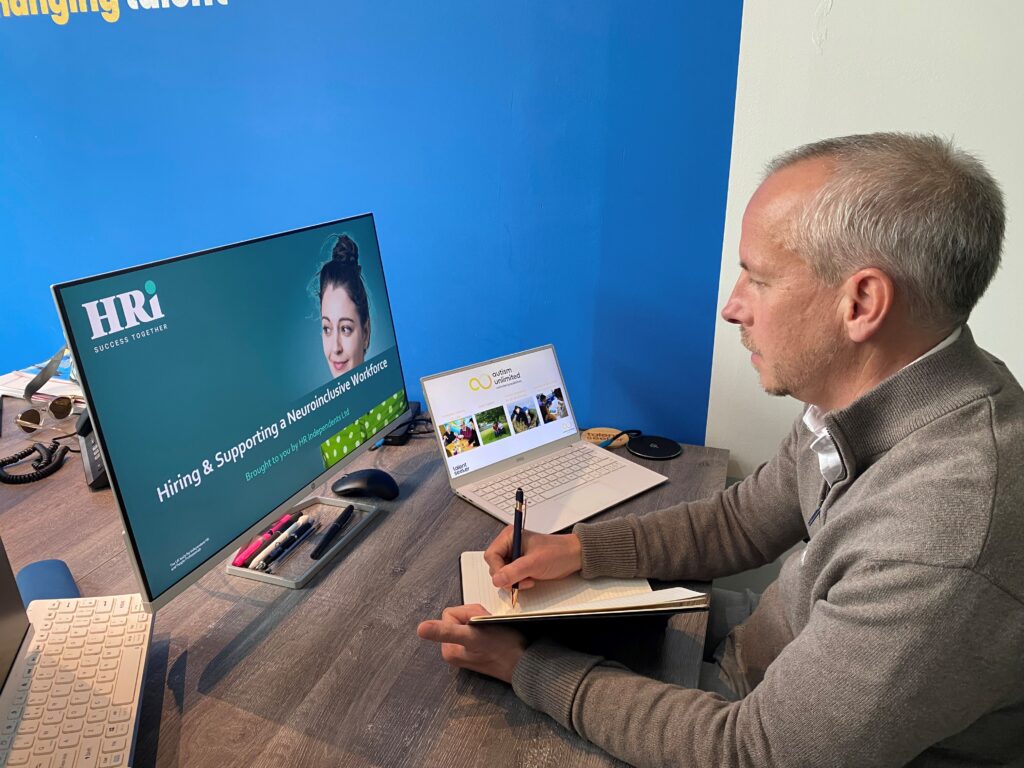
Earlier this month Matt and Naomi Charlton from Autism Unlimited were invited to speak on a webinar hosted by HR Independents, The UK body for independent HR and People Professionals about their insights and tips on creating a neuroinclusive workforce. The session was packed with valuable information, statistics, and actionable strategies to create an inclusive workplace culture for neurodivergent individuals.
In this blog, we have included key takeaways from the talk to help share the importance and raise awareness.
Neurodiversity is a crucial aspect of a truly inclusive workplace, yet many neurodivergent individuals face significant barriers to employment and career progression. Understanding, supporting, and integrating neurodivergent talent can lead to a more innovative, creative, and productive workforce. In this blog, we explore the importance of neurodiversity, the challenges neurodivergent individuals face, and how businesses can adapt to create a truly inclusive environment.
What is Neurodiversity?
Neurodiversity refers to the natural variation in cognitive functioning due to differences in brain development. This can impact how a person thinks, behaves, and learns. Neurodivergent conditions include:
- Dyslexia
- Autism
- ADHD
- Tourette’s Syndrome
- Dyspraxia
- Dyscalculia
Many well-known individuals, including Richard Branson, Billie Eilish, and Michael Phelps, have neurodivergent traits that contribute to their success. Recognizing the strengths of neurodivergent individuals is essential for fostering an inclusive and high-performing workplace.
The Strengths of Neurodivergent Employees
Neurodivergent individuals bring a range of unique skills and attributes to the workplace, including:
- Innovative thinking
- Strong personal values
- Hyperfocus
- Empathy and sensitivity
- Creativity
- Pattern recognition and systems thinking
- Detail processing
- Resilience and tenacity
Harnessing these strengths allows businesses to expand their talent pool, enhance their reputation, and improve customer satisfaction by fostering diverse perspectives and problem-solving approaches.
Challenges Faced by Neurodivergent Employees
Despite their strengths, neurodivergent employees often encounter significant challenges in the workplace, such as:
- Misconceptions and stereotypes: Outdated assumptions about neurodivergent individuals can limit career opportunities.
- Lack of awareness: Employers and colleagues may not understand neurodivergence, leading to exclusionary practices.
- Recruitment difficulties: Traditional application processes may not allow neurodivergent candidates to showcase their strengths effectively.
- Communication challenges: Conventional workplace communication may not align with neurodivergent individuals’ unique expression styles.
- Sensory overload: Open-plan offices and noisy environments can be overwhelming.
- Lack of support: Without tailored accommodations, neurodivergent employees may struggle to perform at their best.
How to Create a Neuroinclusive Workplace
1. Adapt the Hiring Process
To attract and retain neurodivergent talent, businesses must rethink their hiring strategies:
- Modify job descriptions: Focus on skills and potential rather than rigid qualifications.
- Diversify application methods: Accept video submissions or work samples to better showcase candidates’ strengths.
- Improve interview formats: Offer flexible and structured interviews, provide questions in advance, and use practical assessments.
- Train hiring managers: Equip recruiters with the knowledge to assess neurodivergent candidates fairly.
2. Create an Inclusive Work Environment
Once hired, neurodivergent employees thrive in workplaces that accommodate their needs:
- Flexible work arrangements: Remote work and flexible hours can significantly improve performance.
- Quiet spaces: Sensory-friendly areas reduce distractions and support focus.
- Assistive technology: Tools like noise-cancelling headphones or speech-to-text software can enhance productivity.
- Mentorship programs: Pairing neurodivergent employees with mentors fosters inclusion and career growth.
- Ongoing training: Regular neurodiversity awareness training helps create an empathetic and informed workforce.
Why Businesses Must Take Action
Ignoring neurodiversity can lead to lost talent, reduced revenue, increased staff sickness, underperformance, and even legal risks. On the other hand, prioritising neuroinclusion results in a more dynamic, innovative, and loyal workforce. By implementing neuroinclusive hiring and workplace practices, businesses can build stronger, more diverse teams while enhancing their reputation as inclusive employers.
Let’s work together to build workplaces where neurodivergent employees can thrive!
Back


